

Trauma-Informed Classrooms: The Why and The How
 February 12, 2026
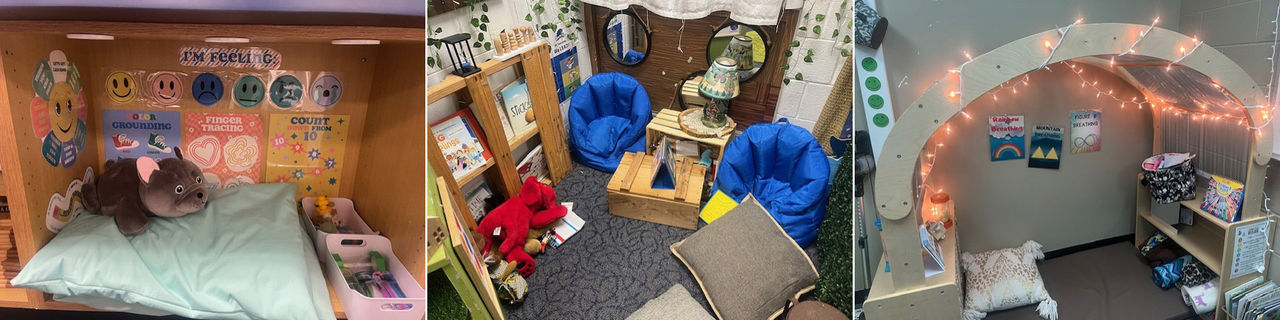
Trauma-informed teaching is not a trend or a program – it is a mindset and daily practice. At its core, trauma-informed education is built on an important truth: Behavior is communication. Our classroom environments can contribute to student stress and escalation, or they can become places that intentionally promote safety, belonging and emotional regulation.
My “Why” as an Educator
As a child, I grew up in classrooms where teachers created spaces that allowed me to thrive. When I came to school, I knew the expectations and the school rules. The classroom felt safe, predictable and supportive. I could learn because my emotional needs were met with calm structure and consistent care. Those experiences shaped me deeply and inspired the teacher I wanted to become.
When I became a classroom teacher, I thought creating that kind of environment would come easily – after all, my teachers made it look effortless. I quickly learned it is anything but easy. I have spent the last 20 years learning how to better meet the needs of students.
Then I became a mother, and when I became a mother to a boy, I learned even more. Many boys have higher energy needs and benefit from movement, structure and explicit teaching of regulation skills. Parenting helped me understand regulation on a deeper level – what children need from us, how quickly emotions can shift and how powerful consistency truly is.
Then COVID changed everything. Suddenly, what had worked before in my classroom was no longer enough. Students returned to school with greater emotional needs, less stamina and more difficulty coping with frustration.
Why Emotional Regulation Skills Matter More than Ever
Research suggests that many children are spending significant time on screens and may have fewer natural opportunities to practice emotional regulation through face-to-face play, problem-solving and conflict resolution. Common Sense Media (2022) reports that children ages 8-12 spend an average of 5 hours and 33 minutes per day on screen media, while teens average 8 hours and 39 minutes per day. The American Psychological Association (2025) also highlights a two-way relationship between screen time and emotional challenges: Increased screen time can contribute to social-emotional difficulties, and children experiencing emotional or behavioral problems may turn to screens as a coping tool.
If students have fewer opportunities to build regulation skills outside of school, then school becomes one of the most important places where those skills must be explicitly taught.
Calming Corners and Regulation Stations (in the Classroom)
At my school, Sonoma Elementary in Harper Creek Community Schools, every classroom includes a calming area or regulation station. This is not a “play space.” It is a tool for learning readiness.
- The student recognizes a strong emotion (frustration, worry, anger, sadness).
- The student enters the calming area and sits in the space.
- The student may use a teacher-provided timer (often 2-5 minutes).
- The student selects a calming strategy (fidget tool, breathing card, feelings book, sensory item).
- When the timer ends — or the student feels ready — the student returns to learning.
Peers are taught to respect this space by leaving classmates alone so they can reset and rejoin the group successfully.
Regulation Supports Outside the Classroom
Sometimes students need more than a short reset in the classroom. When this happens, additional adult support and regulation spaces outside the classroom can help students regulate and return ready to learn. These supports may include exercise stations and movement-based regulation tools, such as wall push-ups, stretching cards, chair yoga or other structured “heavy work” activities designed to help students calm their bodies.
Outside regulation supports may also include breathing tools, such as pinwheels, bubbles, breathing visuals, breathing cards or guided breathing prompts. Many students benefit from pairing these tools with a visual timer to create a predictable routine for regulating. Other sensory supports may include noise-reducing headphones, soft seating, wobble stools, textured fidgets, weighted lap pads, calm-down choice boards, emotion identification cards or reflection sheets. The goal remains consistent: reset → regulate → return to learning.
CASEL and Explicit Skill Instruction
CASEL stands for the Collaborative for Academic, Social and Emotional Learning. The CASEL framework identifies five SEL competencies: self-awareness, self-management, social awareness, relationship skills and responsible decision-making (CASEL, n.d.). At Sonoma, we teach these competencies through “Trails to Wellness” lessons, daily classroom community circles and explicit instruction in regulation and coping strategies.
Students are also taught respectful conflict language such as: “It bugs me when …” or “I wish you would …” This sentence frame gives children a developmentally appropriate script to express feelings, solve problems and repair relationships – skills that support success in school and life.
Trauma-informed teaching reminds us that every student comes to school carrying a story we may not fully know. While we cannot control what happens outside of school, we can create an environment inside our building where students feel safe, loved and that they belong. That is why teaching emotional regulation matters. When students learn how to calm their bodies, name their emotions, and use strategies to reset, they become more available for learning. They begin to believe, “I can handle hard things.”
These are not just school skills – they are life skills. When we teach emotional regulation, we aren’t only managing behavior – we are helping children build the tools they need to thrive.
Lindsey Cook is with Sonoma Elementary School in Harper Creek Community Schools.
References
- American Psychological Association. (2025, June 9). Screen time and emotional problems in kids: A vicious circle?
- CASEL. (n.d.). What is the CASEL framework? Collaborative for Academic, Social, and Emotional Learning.
- Rideout, V., & Robb, M. B. (2022). The Common Sense Census: Media use by tweens and teens, 2021. Common Sense Media.